


In the rapidly evolving landscape of urban mobility, the paradox of parking remains a significant hurdle. While cities become smarter, the management of individual parking spaces often remains stuck in the analog age—reliant on manual barriers, physical cones, or costly infrastructure overhauls. The primary barrier to digitalization has always been the “deployment cost”: the need for heavy drilling, complex wiring, and permanent modifications to the ground.
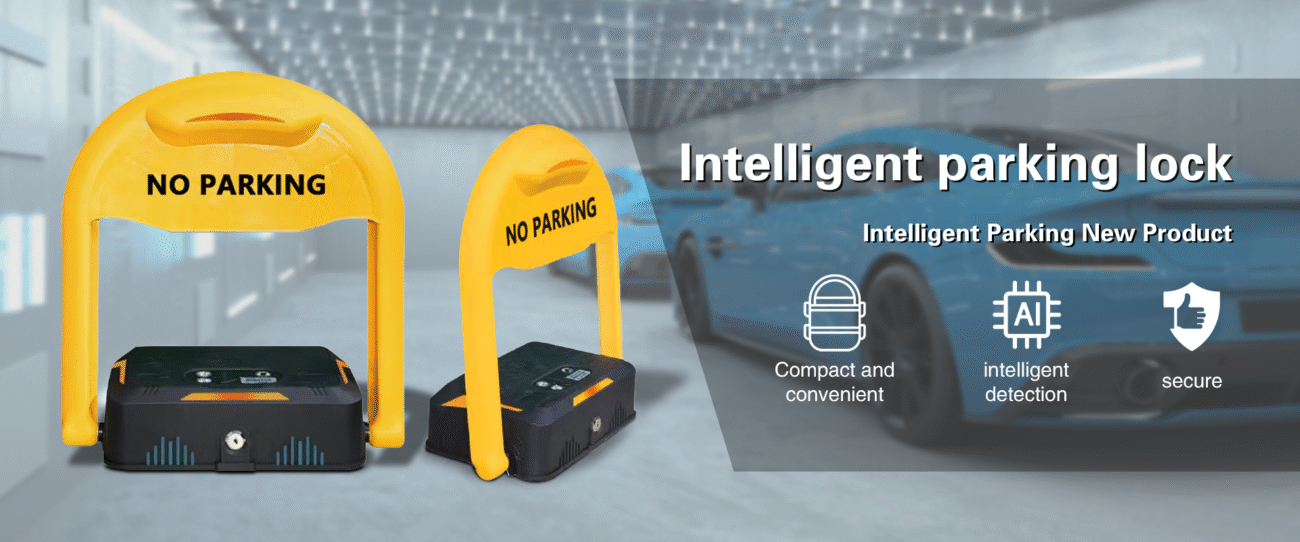
However, a new generation of hardware is dismantling these barriers. By adopting a “Flat Design” philosophy combined with high-integration IoT capabilities, the flat design parking lock has transformed from a simple mechanical barrier into a standardized, “plug-and-play” infrastructure unit. Whether it is a single private driveway or a thousand-space commercial parking lot, this technology allows for rapid, generalized deployment without the need for traditional construction. This article explores how the synergy of industrial design and multi-protocol communication is redefining the digitalization of parking spaces.
1. The Aesthetics of Low-Profile Engineering: Why “Flat” is Functional
The new parking space lock integrates an RS485 interface, making it suitable for high-security buildings. It utilizes hardwired connections to avoid interference and ensure long-term system stability. Even under strict radio regulations, the device maintains precise responsiveness. This overcomes the problem of signal blind spots and strengthens parking management.
The “Chassis-Friendly” Architecture
The defining characteristic of this new wave of hardware is its ultra-low profile. When in the “down” position, the lock sits just centimeters above the ground.
-
The Action: This slim geometry ensures that even the lowest sports cars can pass over it without contact.
-
The Result: By minimizing the physical footprint, the lock integrates seamlessly into the ground plane, appearing more like a natural architectural detail than a protruding piece of machinery.
Non-Invasive Installation
The “Flat Design” extends beyond the visual to the structural. Because these locks are engineered to distribute weight evenly across a flat base, they do not require deep foundation work. In many scenarios, high-strength industrial adhesives or a few shallow expansion bolts are enough to secure the unit. This “Surface-Mount” approach means that property managers can deploy a smart system over a weekend without closing the lot for construction.
2. Multi-Protocol Communication: The “Brain” of Generalized Deployment
A lock that cannot communicate is merely a piece of metal. To achieve generalized deployment across different sectors—from residential to commercial—the flat design parking lock must speak multiple “digital languages.”
4G/5G: The Commercial Powerhouse
For large-scale commercial parking operators, wide-area connectivity is essential. Integrated 4G modules allow each lock to connect directly to the cloud without the need for local gateways. This enables:
-
Remote Management: Real-time monitoring of occupancy and battery status across multiple city locations.
-
Automated Billing: Integration with payment apps so that the lock only lowers once the user has successfully reserved and paid for the spot.
Bluetooth: The Private Spot Solution
For individual homeowners in private residential complexes, Bluetooth connectivity offers a “Low-Latency” and “Zero-Cost” interaction.
-
Proximity Sensing: As the owner’s car approaches, the lock detects the authorized smartphone signal and lowers automatically, providing a frictionless “hands-free” experience.
RS485/Hardwired Integration
In new-build smart buildings or high-security government facilities, the flat design parking lock can be integrated via RS485 for hardwired stability. This ensures that the parking management system remains operational even in environments with high signal interference or strict “No-Wireless” policies.
3. The “Standardized Unit”: Building the Parking IoT Grid
The ultimate vision for the flat design parking lock is to become the “Standardized Unit” of the Parking IoT. Much like how a standardized shipping container revolutionized global trade, a standardized parking lock revolutionizes urban space.
Interoperability and Open APIs
Because these locks are designed as modular units, they can be easily integrated into third-party Smart City platforms. A city council can deploy thousands of these locks to manage EV charging spots, ensuring that only electric vehicles can park there while they are actively charging.
Resilience in Extreme Environments
To be truly “generalized,” the hardware must survive everything from desert heat to salt-heavy coastal air.
-
IP68 Waterproofing: The flat, sealed design prevents water ingress even during flooding.
-
Pressure Resistance: High-strength steel or reinforced aluminum casings allow the lock to withstand up to 5 tons of pressure, ensuring that even heavy SUVs or delivery vans can drive over the base without damaging the internal electronics.
4. Transforming Business Models: From Ownership to Sharing
The ease of deployment offered by the flat design parking lock has birthed the “Parking Sharing Economy.”
-
The Private Benefit: A homeowner can “lease out” their parking spot during work hours. By sharing their lock’s digital key via a mini-program, they can monetize an idle asset with zero manual intervention.
-
The Commercial Benefit: Shopping malls can designate “VIP” or “Pre-booked” spots dynamically. If a spot is not reserved, the lock stays down for general use; if a VIP booking comes in, the lock rises to protect the space. This fluidity maximizes the ROI of every square meter of asphalt.
5. Conclusion: The Invisible Infrastructure of a Smarter City
The flat design parking lock represents the final step in the digitalization of the urban streetscape. By removing the “Friction of Installation” and adding the “Power of Connectivity,” we have turned the static parking spot into a dynamic digital asset.
As we move toward a future of autonomous vehicles and highly managed urban spaces, the need for “Instant Deployment” hardware will only grow. This flat, smart, and resilient lock is not just a tool for stopping unauthorized parking; it is the fundamental “bit” of the parking internet—a bridge between the physical ground and the digital cloud. Realizing the potential of smart parking no longer requires a jackhammer; it simply requires a smarter lock.